

Better Supplier Data in Your Oracle ERP
Bridge Graphite Connect's validated supplier data with Oracle ERP Cloud, JD Edwards, E-Business Suite and PeopleSoft — automated, accurate, and always in sync.





.png)





A Clean Vendor Master You Can Trust
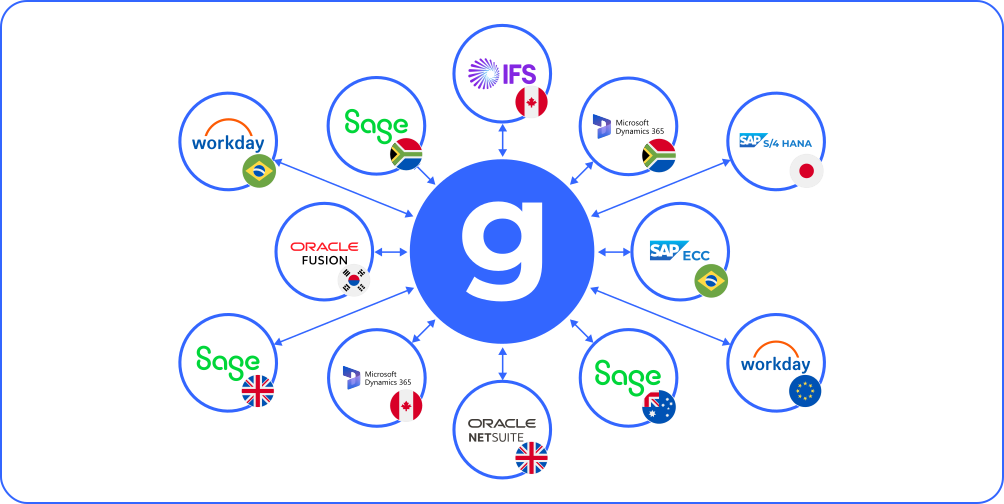
Oracle ERP environments demand clean, validated supplier data. Graphite Connect integrates directly with the full Oracle product family to ensure your vendor master stays current, compliant, and free of manual entry errors.
How the Oracle Integration Works





01 - Connect: Graphite Connect's integration engineers configure the connection to your Oracle ERP environment using OAuth 2.0 authentication.

Supported Oracle Products
Full integration support with Oracle ERP Cloud via API-based connectivity. Real-time bidirectional supplier data synchronization.

Supported with custom configurations forlegacy EBS environments. Flexible integration methods to match your architecture.

Supported through custom integration, connecting Graphite Connect's validated supplier data to your JD Edwards vendor master.

Available via API integration for PeopleSoft environments.

Many Ways to Integrate, Designed for Your Team
Graphite Connect supports multiple integration methods for Oracle environments:
API-based: RESTful API integration (primary method)
File-based: Automated file exchange for batch processing
Oracle Integration Cloud (OIC): Native support for Oracle's iPaaS platform

Key Capabilities of the Oracle Integrations
Real-Time & Batch Sync
- Real-time sync for most Oracle ERP systems
- Batch processing available for high-volume transfers
- Support for multiple Oracle instances simultaneously
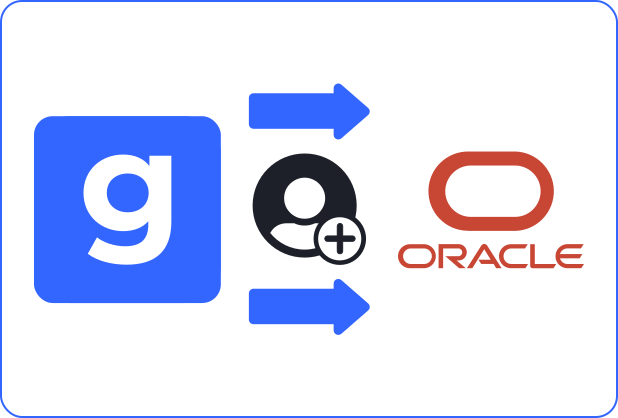
Automated Vendor Master Updates
- Supplier data changes in Graphite Connect automatically sync to Oracle
- Batch processing available for high-volume transfers
- Reduce manual data entry and eliminate duplicate records
- Maintain a single source of truth across systems
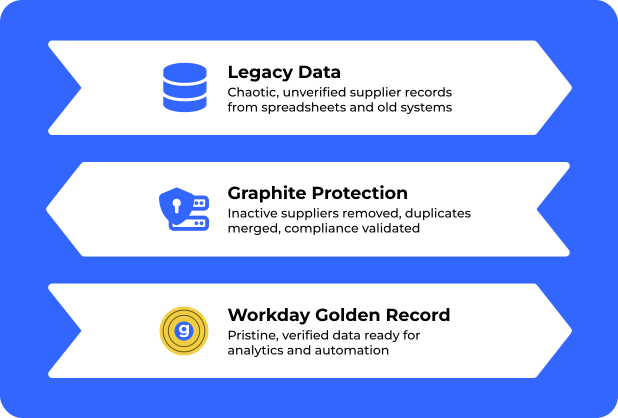
Pre-ERP Data Validation
- Bank account ownership verification
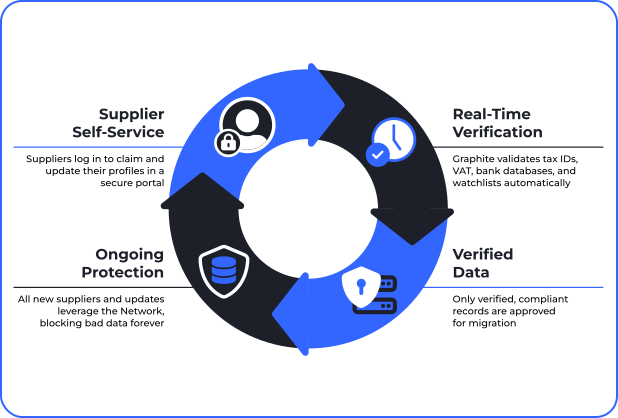
- Tax ID validation and sanctions screening (OFAC, EU, UN, HMT, DFAT)
- Duplicate detection against existing Oracle vendor records
- AI document extraction for compliance documentation
Implementation Timeline
ERP configuration takes as little as 4 weeks. Our experienced Integration Engineers handle the technical setup so your team can focus on business processes. Typical SAP integration timeline:



production sync
Frequently Asked Questions (FAQs)
Does Graphite Connect integrate with Oracle ERP?
Yes. Graphite Connect integrates with the full Oracle product family — Oracle ERP Cloud, E-Business Suite (EBS), JD Edwards, and PeopleSoft. It connects via API-based integration, automated file exchange, and Oracle Integration Cloud (OIC), syncing validated supplier and vendor master data into your Oracle environment without manual entry.
How does the Graphite Oracle integration sync supplier data?
The integration connects to Oracle using OAuth 2.0, maps Graphite's supplier fields to your Oracle vendor master, and syncs new suppliers, profile updates, and validations automatically. For Oracle ERP Cloud the sync runs in real time and bidirectionally, keeping records consistent across both systems.
Which Oracle products does Graphite support?
Graphite supports Oracle ERP Cloud (real-time bidirectional API sync), Oracle E-Business Suite (via flexible configurations for legacy environments), JD Edwards (custom integration to your vendor master), and PeopleSoft (API-based integration). Graphite's integration engineers recommend the right method for each Oracle environment and architecture.
Can Graphite connect to on-premise Oracle E-Business Suite?
Yes. Graphite connects to on-premise Oracle EBS through a lightweight connector that runs inside your network, querying the Graphite Public API for supplier updates and writing them to EBS via stored procedures. This keeps your EBS vendor master current without exposing your environment.
What integration methods does Graphite support for Oracle?
Graphite supports three Oracle integration methods: RESTful API integration (the primary method), automated file-based exchange for batch processing, and native support for Oracle Integration Cloud (OIC), Oracle's iPaaS platform. Graphite can also sync across multiple Oracle instances simultaneously.
Does Graphite validate supplier data before it enters Oracle?
Yes. Graphite runs AI-powered checks before data reaches Oracle — bank account ownership verification, tax ID validation, sanctions screening against OFAC, EU, UN, HMT, and DFAT lists, and AI document extraction for compliance. Only clean, validated supplier records enter your Oracle vendor master.
Does Graphite prevent duplicate vendor records in Oracle?
Yes. Graphite runs duplicate detection against your existing Oracle vendor records and lets suppliers maintain their own validated profiles. This eliminates duplicates, reduces manual data entry, and maintains a single source of truth across systems — so your Oracle vendor master stays clean and accurate.
Is the Graphite Oracle integration real-time or batch?
Both. Graphite syncs in real time for most Oracle ERP systems, while batch processing is available for high-volume transfers. The integration also supports multiple Oracle instances simultaneously, so supplier data changes flow to the right environment automatically.
How long does it take to implement the Graphite Oracle integration?
Oracle ERP configuration takes as little as four weeks. Graphite's integration engineers handle the technical setup — discovery and field mapping (weeks 1–2), sandbox testing and validation (weeks 2–3), and production go-live (weeks 3–4) — so your team can focus on business processes, not technical plumbing.